November 12, 2026 · 8 min read · By Justin Zarudny, Principal
Should you get a mold inspection before buying a house?
A pre-purchase mold and water damage inspection can help you understand moisture concerns before you commit to a home. It is particularly useful when there is a musty odor, staining, a disclosed leak, recent water-damage repairs or a recommendation for further evaluation from your home inspector. Finding a problem early gives you time to investigate the source, obtain repair estimates and discuss your options with your real-estate agent. It can reduce uncertainty about potential costs, but cannot guarantee that every concealed condition will be found.
What can go unseen during a home purchase?
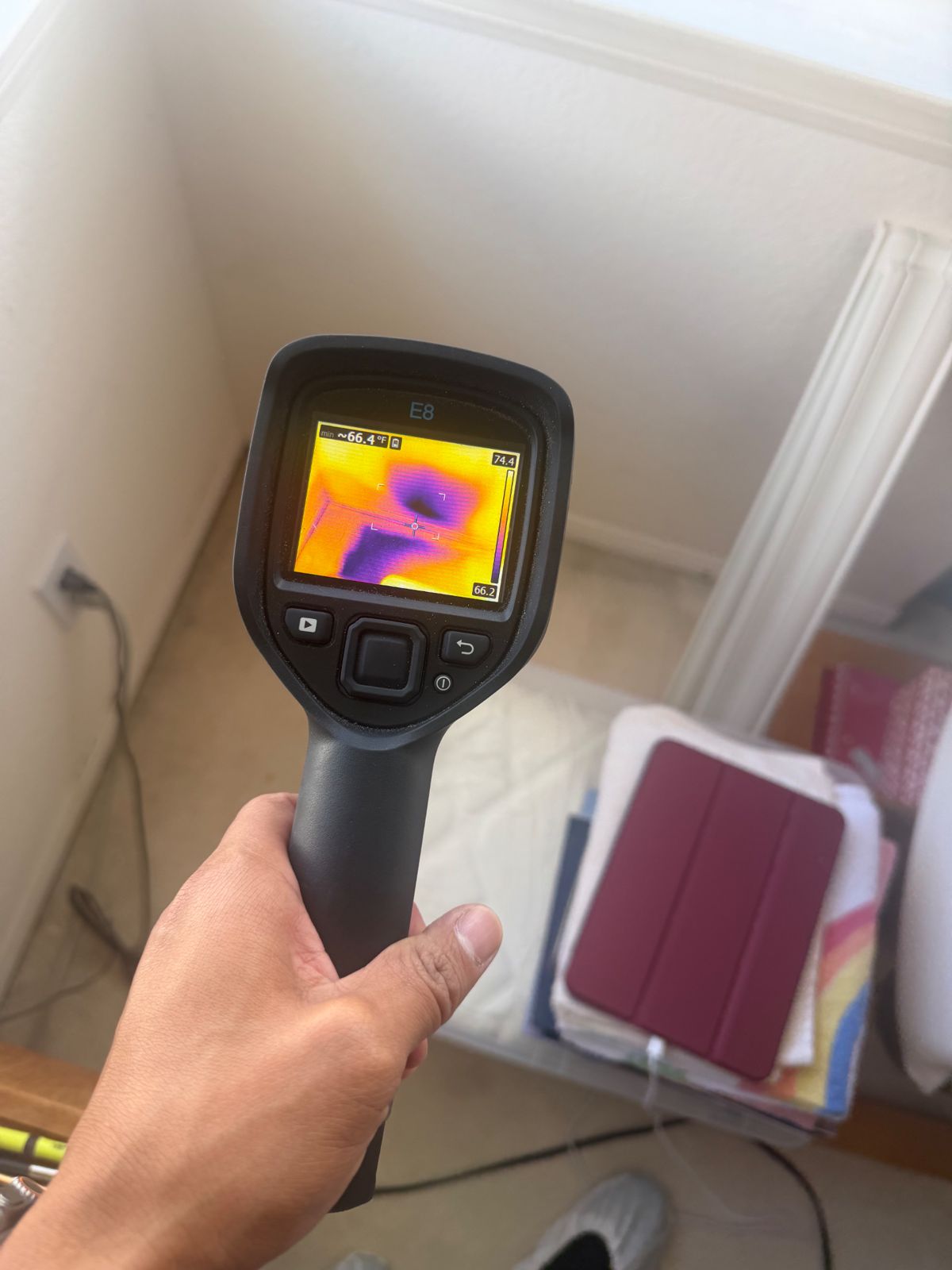
Fresh paint, new flooring and a dry-looking wall do not establish that the materials underneath are dry or that a past leak was fully addressed. Areas worth evaluating include plumbing cabinets, lower walls, flooring transitions, window and roof leak paths, attics and accessible crawlspaces. Ask for the property's water-damage history, prior inspection reports, drying records and repair documentation. A stain may reflect an old event rather than an active leak; an odor alone does not prove mold is present.
What a pre-purchase mold and moisture inspection includes
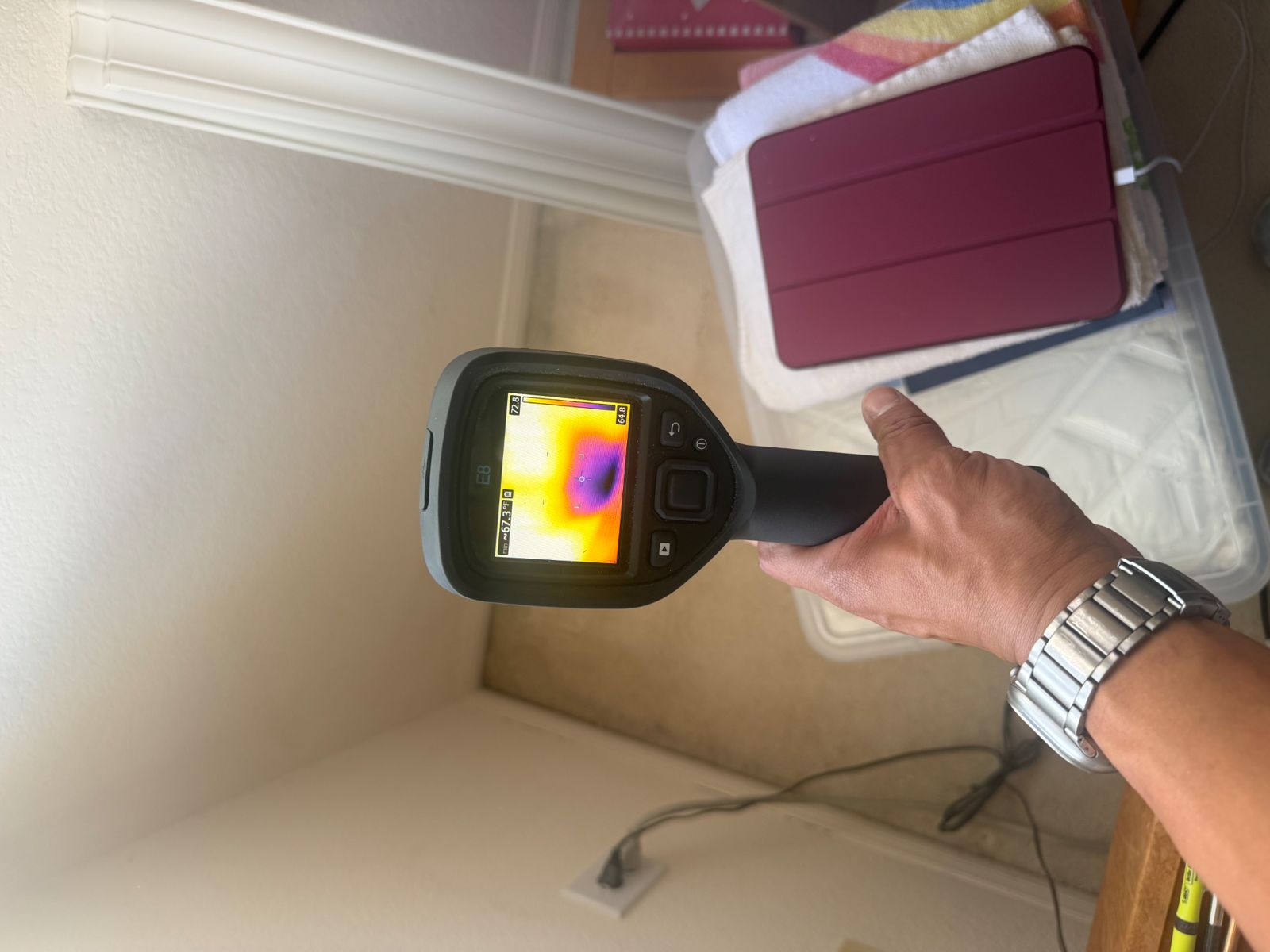
Origin begins with the property's history, your concerns and the authorized scope. Depending on the selected package, the work can include an accessible-area visual inspection, moisture readings, thermal imaging checked against meter readings, photographs, mapped findings and targeted air or surface sampling. Written interpretation must be included in the package if you need an explained report for your purchase decision; the Basic Mold Testing package provides the laboratory report without interpretation. This focused inspection complements, rather than replaces, your general home inspection, appraisal or specialist evaluation of structural and trade-related issues.
Why an air test alone is not enough
EPA guidance emphasizes moisture investigation and visual assessment. There are no established federal safe levels for mold, and a short air sample cannot certify an entire home as mold-free. Thermal imaging shows surface temperature patterns, not a view through walls. Closed cavities, inaccessible areas and intermittent leaks may require additional authorized investigation. Any opening of walls or other invasive access must be coordinated with the seller and authorized before work proceeds. A useful report states these limitations instead of promising that nothing was missed.
How inspection findings can support repair negotiations
Documented findings give the buyer, seller and their agents a clearer basis for discussion. Photographs, locations, moisture readings and interpreted laboratory results, when included, can help define what needs further evaluation. Qualified contractors can then provide written estimates for correcting the moisture source, addressing affected materials and verifying the work before reconstruction. Keep those estimates separate from the inspection findings: Origin provides independent inspection and testing, not repair pricing, an appraisal or a determination of a fair purchase price.
Seller credits: an option, not a guarantee
A seller credit, a negotiated price adjustment or agreed repairs may be options when problems are identified. A credit can give a buyer more control over arranging work after closing, but it does not fix the problem itself and may not cover the final cost. A seller is not guaranteed to agree, and there is no reliable standard credit amount for mold or water damage. Your agent should handle the negotiation, and your lender should confirm any financing or credit restrictions before you rely on an agreement. Contract terms, deadlines, lender requirements and the parties' agreement determine what is available; Origin does not provide legal or lending advice.
A practical checklist before your inspection deadline
Schedule early enough to allow the inspection, any laboratory analysis, written interpretation, contractor estimates and negotiation before your contractual deadlines. Tell Origin the inspection or contingency deadline when requesting a scope; do not assume same-day laboratory results. Provide disclosures and prior water-damage records, identify the rooms of concern, and arrange access with your agent. Ask contractors to separate source correction, removal or cleaning, drying, verification and reconstruction in their estimates so you can understand the work and budget for unresolved uncertainty. Do not remove a contingency based solely on an unexplained laboratory result; discuss the findings and your next steps with your agent.
If the seller completes repairs before closing
If repairs are negotiated before closing, request a documented scope, records of source correction and drying, and any agreed independent verification. Post-remediation verification can assess visible cleanliness, moisture conditions and sampling criteria when required by the project, within the authorized accessible areas. Ideally, verification happens before new drywall, flooring or cabinets conceal the work. A verification result is not a warranty that future leaks or mold cannot occur, nor does it certify every hidden part of the home.
San Diego County homes: match the scope to the property
Origin serves buyers throughout San Diego County, including San Diego, La Jolla, Carlsbad, Poway, Rancho Bernardo and surrounding communities. The useful scope depends on the individual home: a coastal condo with window-intrusion history needs a different investigation from an inland house with a plumbing leak or attic concern. For condos and shared buildings, ask your agent about access and relevant HOA repair records. If proposed repairs disturb older suspect materials or pre-1978 paint, discuss appropriate asbestos or lead testing before that work begins.
Schedule an independent buyer inspection
Call (858) 833-0033 or request an inspection and mention that you are purchasing the home, your deadline, the property location and any known leak or mold history. Origin Environmental only inspects and tests; it does not perform remediation or restoration. If findings call for corrective work, Origin can refer vetted IICRC-certified contractors. The goal is a clearer picture of the property's condition so you and your agent can pursue an informed, mutually agreed resolution—not a guaranteed seller credit or a promise of zero surprise costs.
Buyer FAQ: repairs and seller credits
- How can mold or water damage findings help me discuss repairs with the seller?
- A report with photographs, affected locations, moisture readings and written interpretation, when included in your scope, gives you and your agent specific conditions to discuss rather than an unexplained concern. Ask qualified contractors for estimates that address the moisture source and affected materials, then have your agent present the findings and requested resolution to the seller. The report supports the discussion; it does not set a repair price or require the seller to agree.
- Can I ask for a seller credit instead of repairs before closing?
- You can discuss a seller credit, agreed repairs or a price adjustment with your agent. A credit may let you choose contractors and arrange work after closing, but the seller may decline and your lender may restrict how credits can be used. Confirm the contract terms, deadlines and financing requirements before relying on an agreement. A credit does not resolve an active leak or mold condition by itself.
- How much seller credit should I request for mold or water damage?
- There is no standard credit amount. Obtain written estimates for correcting the source, drying, removal or cleaning where needed, independent verification and reconstruction. Unopened areas may create uncertainty about the final scope and cost. Your agent can help you use those estimates in a proposed resolution; Origin does not assign credits, provide repair pricing or determine a fair purchase price.
- What should I do if the seller offers to paint over stains or replace damaged drywall?
- Cosmetic work alone does not establish that the moisture source was corrected or concealed materials are dry. Ask for the repair scope, source-correction and drying records, and any agreed independent verification before replacement materials conceal the work. Verification evaluates the authorized areas against the project's criteria, not every hidden part of the home.
- Will a pre-purchase inspection eliminate surprise costs after I buy?
- No inspection can guarantee that every hidden problem will be found or that future leaks will not occur. A focused mold and moisture inspection can reduce uncertainty by identifying accessible concerns and explaining limitations before closing. Schedule early enough for any laboratory results, written interpretation, contractor estimates and discussions with your agent before your contractual deadlines.
Sources
Scope of services
Origin evaluates building and environmental conditions. It does not diagnose illness, determine individual medical risk, make insurance-coverage decisions, provide legal opinions, or issue engineering conclusions.